Derila pillow for sleep apnea: can the Derila Ergo pillow, a cervical contour pillow for neck pain, help with snoring and apnoea?

Updated: October 2026 · Tested for several weeks
"You stopped breathing again last night." If someone has said that to you, or you've been told you snore like a tractor, you've probably seen the Derila advert promising better breathing. This page is about what a contour pillow can and can't do for snoring and sleep apnoea, without the sales gloss.
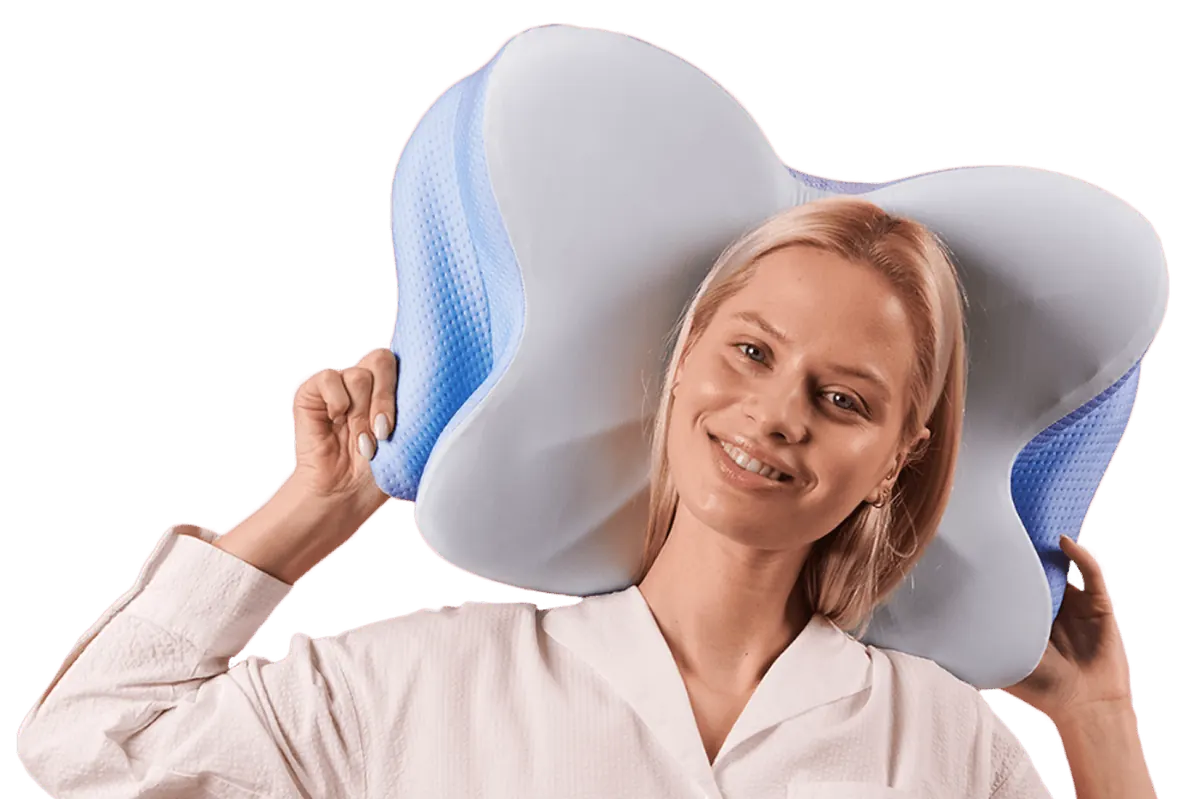
Read this first. The Derila Ergo is a comfort pillow, not a medical device. It doesn't diagnose, treat or cure sleep apnoea. If you've been diagnosed and use a CPAP machine, keep using it. If you suspect sleep apnoea, see your GP. Nothing on this page is medical advice.
I'm a health and sleep writer, not a doctor. I tested the pillow for four weeks for my full Derila pillow review, and for this page I read what the NHS says about obstructive sleep apnoea, what customers report about snoring, and what other contour pillow owners say on Reddit. Here's what holds up.
Short answer: do Derila pillows help with sleep apnea? Not as a treatment. What the pillow can do is keep your head and neck aligned and make side sleeping more comfortable. For people whose snoring is worse on their back, that may help reduce snoring. For diagnosed sleep apnoea, it's at most a comfort extra alongside the treatment your doctor recommends.
Snoring vs obstructive sleep apnoea: why you wake up tired
Snoring is the sound of soft tissue in the throat vibrating as air squeezes past. It's common, it's annoying for whoever shares your bed, and on its own it isn't necessarily a health problem.
Obstructive sleep apnea (OSA, or obstructive sleep apnoea in British spelling) is different. The airway narrows or closes repeatedly during sleep, so breathing stops and starts. According to the NHS, the signs at night include breathing that stops and starts and gasping, snorting or choking noises. During the day, people often feel very tired and struggle to concentrate. That daytime fatigue is often what sends people to the GP in the end.
That's why this matters. A pillow might soften the snoring and leave the apnoea underneath it untouched. You'd sleep more quietly and still wake exhausted, and the partner who used to nudge you would stop noticing the pauses.
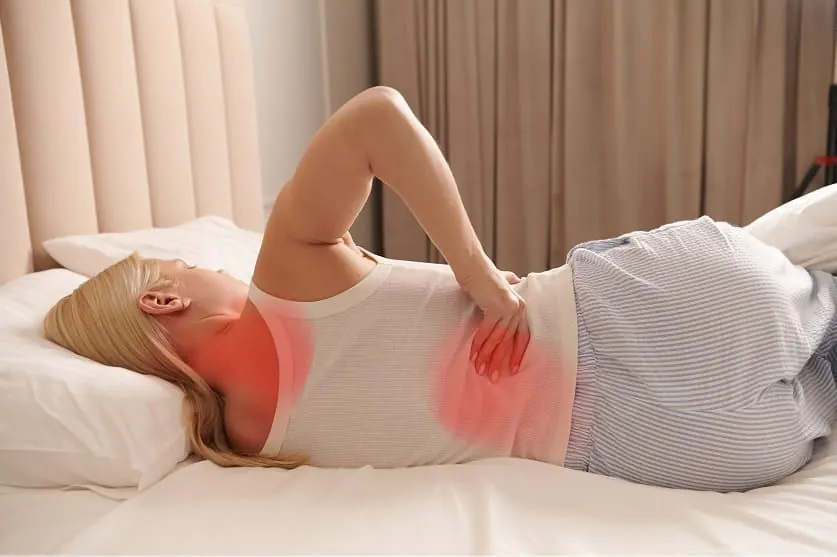
What the NHS says about sleep apnoea treatment
I checked the NHS page on obstructive sleep apnoea (October 2026) so I could tell you what it actually says rather than what adverts imply:
- Diagnosis: if your GP thinks you might have sleep apnoea, they may refer you to a specialist sleep clinic for tests.
- Lifestyle: sleep apnoea can sometimes be treated with lifestyle changes such as losing weight, stopping smoking and drinking less alcohol, and these may be all you need if it's mild.
- CPAP: many people need a CPAP machine, which gently pumps air into a mask over your nose, or nose and mouth, while you sleep. The NHS provides it free if you need it.
- Sleeping position: the NHS suggests sleeping on your side, and even mentions taping a tennis ball to the back of your sleepwear so you don't roll onto your back.
- Driving: you may need to tell the DVLA about your sleep apnoea.
Notice what's missing: no mention of a special pillow. Side sleeping is on the list, and that's the only place a pillow comes in. Not as a cure, but as something that can make side sleeping comfortable enough that you stay there.
How the Derila Ergo pillow works for snoring and side sleepers
The Derila Ergo is a memory foam pillow with a butterfly shape, made of high-density foam (the brand says it is CertiPUR-certified, with no latex), 54 x 36 cm and about 12 cm high. Its ergonomic support comes from the shape, not from any "anti-snore technology":
- On your side, the wings fill the gap between ear and shoulder and the cutout makes room for your shoulder and arm. This is the bit that matters for snoring: if side sleeping is comfortable, you're less likely to roll onto your back.
- On your back (the supine position), the central hollow is designed to cradle the back of your head while the front edge is meant to support the natural curve of the neck, so the chin doesn't drop onto the chest. Snorers tend to be noisiest here, though.
- Through the night, the foam doesn't collapse like a fluffy feather pillow. It holds your head at roughly the same height from bedtime to the alarm, which keeps the head, neck and spine aligned.
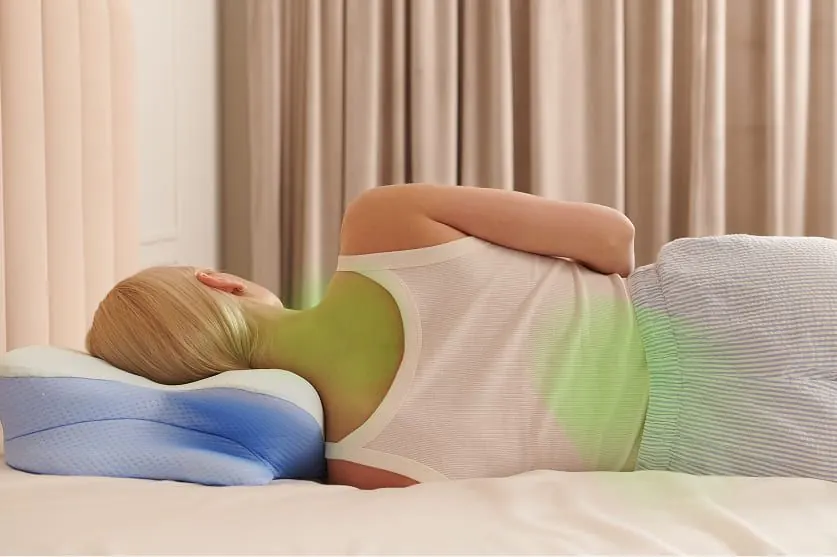
That's the realistic mechanism. A neutral head and neck position and more time on your side are two things that can ease positional snoring. They don't open a blocked nose, they don't change the anatomy of your throat, and they don't undo the effect of a few pints before bed.
What I noticed in my own test
One observation, for what it's worth. My husband snores mainly on his back. He used the Derila for three nights, spent more of the night on his side, and the room felt quieter to me. Three nights, one person, no recording: a hint, not evidence. For me the bigger change was in my neck. The morning stiffness that used to last until mid-morning eased after the first week, once I'd got through three or four nights of the pillow feeling too firm.
See the Derila Ergo on the official site (60-day returns)Official Derila site · 60-day returnsUsing a Derila pillow with a CPAP mask
If you already use CPAP, the pillow question is different: it's about comfort with the mask on, not about breathing. A few practical points:
- Keep the CPAP. No pillow replaces it. Changes to your treatment are for your sleep clinic to decide.
- Mask type matters. A nasal mask is smaller than a full-face mask. On your side, a bulky mask can press into any pillow and shift, which can cause leaks.
- The Derila isn't sold as a CPAP pillow. CPAP pillows are a separate category, often with cut-outs shaped for the mask and hose. The Derila's side cut-outs are there for your shoulder, not your mask.
- Use the trial period. If you try it with your mask, give it a week and use the 60-day returns if the mask keeps leaking.
If mask leaks or discomfort are spoiling your nights, mention it to your sleep clinic. Mask fit is something they deal with every day.
Wedge pillow, body pillow or contour pillow: which is the best pillow for sleep apnea?
There's no single best pillow for people with sleep apnoea, because a pillow isn't the treatment. But if your doctor has said sleeping position matters for you, here's how the usual options compare:
| Type | What it does | Worth knowing |
|---|---|---|
| Contour pillow (like the Derila Ergo) | Holds your head in line with your spine, makes side sleeping comfortable | Firm at first; not great for a stomach sleeper |
| Wedge pillow | Raises the whole upper body at an angle | Sometimes suggested for back sleepers who snore; ask your GP or sleep clinic |
| Body pillow | Something to hug, which helps some people stay on their side | Takes up room in the bed |
| CPAP pillows | Shaped to leave room for the mask and hose | Only relevant if you already use CPAP |
| Very high "anti-snore" pillow | Props the head up | On your back, it can push the chin towards the chest |
A cheap trick from the NHS page costs nothing: the tennis ball sewn or taped to the back of your sleepwear. If that alone makes you quieter, your snoring is probably positional, and a pillow that makes side sleeping comfortable could be worth trying.
Pros and cons of the Derila for snoring and sleep apnea
Pros
- Makes side sleeping comfortable, which can reduce positional snoring
- Steady neck support: many owners report a less stiff neck in the morning
- Removable cooling cover, washable
- 60-day money back guarantee on the official site
Cons
- No effect on apnoea itself; not a substitute for CPAP
- Firmness takes three or four nights to get used to
- Fixed height of about 12 cm; poor for front sleepers
- Not designed around a CPAP mask
What reviewers on Trustpilot and Reddit say about Derila and snoring
On Trustpilot, Derila scores 4.1/5 from 46,037 reviews (checked 5 October 2026). Among the positive reviews, several people say they breathe more easily or snore less, along with the more common comments about comfort and a less stiff neck. On the other side, 13% of reviews are 1 star. Those are mostly about the checkout pushing extras, and order or delivery problems for a minority, rather than the pillow itself.
On Reddit, especially in sleep apnoea groups, the tone is cooler. People who use CPAP tend to be sceptical of any pillow sold as an apnoea solution, and that scepticism is healthy. A pillow can improve sleep quality and comfort; it won't fix an airway that closes. If a reviewer says the Derila cured their apnoea, I'd want to know what their sleep clinic said.
So, is Derila a gimmick? The shape isn't. It's a well-made contour pillow for neck pain and side sleeping. The gimmick is the idea that any pillow treats sleep apnoea.
Return policy, refund and buying from the official site
Because you can't know in advance whether the firmness suits you, the guarantee matters:
- Bought on the official site? You have 60 days from delivery to return it, even if you've just changed your mind.
- Use the contact form to get a return number (RMA), then post it back.
- Your refund arrives within 14 working days of them receiving it. Postage isn't refunded.
Bought from another seller, such as a reseller on Amazon? That seller's own returns policy applies. If a pillow arrives defective or damaged, contact whoever you bought it from straight away. Watch out too for "Derilo Ergo", an imitation rated 1.7/5 on Trustpilot. Packs and prices are covered on the Derila pillow price page.
Transparency: this site may earn an affiliate commission if you buy through our links. It doesn't change what we write about apnoea.
My verdict: who should try it, who should see a GP first
Worth trying if you snore mainly on your back, wake with a stiff neck, and nobody has noticed pauses in your breathing. Give it a week and use the returns window if it doesn't suit you. My guide on how to use the Derila pillow explains how to place it on your side.
See your GP first if someone has seen you stop breathing, you wake gasping or choking, you're very tired during the day, or you're dozing off at the wheel. Those are reasons to get tested, not to buy a pillow.
Already on CPAP? Keep it. The Derila can be a comfortable pillow alongside it, nothing more.
For the full four-week diary, sleep positions and every review figure, read my Derila Ergo pillow review.
Try the Derila Ergo with 60 days to decideOfficial Derila site · 60-day returnsHas written about health and sleep for 9 years and tests pillows, mattresses and sleep accessories for readers who wake up with a stiff neck. She judges a pillow on what matters at night: neck support, height, heat, the adjustment period and the returns terms. How we test
FAQ: the Derila pillow and sleep apnea
Do Derila pillows help with sleep apnea?
Not as a treatment. The Derila Ergo isn't a medical device. It may make side sleeping more comfortable, which can reduce positional snoring for some people, but it doesn't treat obstructive sleep apnoea or replace CPAP.
What is the best pillow for people with sleep apnea?
No pillow treats sleep apnoea. If your doctor says position matters, a pillow that makes side sleeping comfortable, like a contour pillow, may help you stay off your back. Wedge pillows are sometimes suggested too; ask your GP or sleep clinic.
Does the sleep apnea pillow really work?
Pillows sold for apnoea mostly work, at best, by changing your sleeping position. That can help snoring that's worse on your back. It doesn't fix an airway that closes, which is why diagnosed apnoea needs proper treatment.
Is Derila a gimmick or does it work?
As a contour pillow for neck support and side sleeping, it works for many people: 4.1/5 from 46,037 Trustpilot reviews. As a sleep apnoea treatment, no pillow works, Derila included.
Can I use the Derila pillow with a CPAP mask?
You can, but it isn't designed around a mask, and how it sits depends on your mask. Try it for a week and use the 60-day returns if your mask keeps leaking.
Is the Derila good for snoring?
It can help if your snoring is mainly on your back, because it makes side sleeping comfortable and keeps your head aligned. It won't help snoring caused by a blocked nose, alcohol or weight.